Tagged with " education"

Defiance and Expectations

This post is going to be fast and messy, but it’s been a big week, and I feel like I need to get this out there for the people in my life who get news from this blog or care about the topic at hand.

The school year started for the boys on September 4, and it’s been a rocky start. Connor, our 10-year-old, liked his teacher, and was overjoyed to be back with his friends, but every day it’s been excruciatingly difficult to get him out the door, and now Griffin is putting up the same fight because he’s taking the cue from his brother that School Is To Be Avoided.

Connor’s still fenced in by extreme anxiety when it comes to math (despite his extraordinary abilities in the subject–at least in my case, the anxiety came from not being able to do it). We’ve established psychiatric care and a great therapist, but he hasn’t got into the real swing of things with them yet, with regular appointments and close monitoring. And while the partial hospitalization program in which he participated last spring has removed the immediate threat of suicide, he’s still emotionally volatile, though to a less extreme degree and in fewer instances than he was before we found a combination of medications that work well for him.

Through all this, we’ve always been able to answer quickly and honestly that Connor is not a danger to anyone but himself, except in the instance that a concerned adult might try to put him/herself in his way when he’s in full, physical meltdown mode. This week, that changed. For reasons we still don’t fully understand, he attacked one of his good friends in class, at the end of a short, incredibly fast series of misunderstandings, misinterpretations, frustrations, and other perfect-storm-like colliding factors. He put her in a chokehold, refused to let go, then flung her down to the floor, and bolted from the room.

He was immediately swamped with remorse, and he doesn’t fully remember the instance, a good indication that his emotions had completely derailed any kind of reason (from a previous post, the elephant was in full charge, and probably lost the rider entirely for a time). And as parents, the news that your child hurt and frightened another child is so close to the horror and anger and grief of your child being the object of such an incident. We all took word of his 3-day suspension without a word of protest.

But the school social worker indicated quite plainly that, while Connor has a safety plan in place to prevent meltdowns or self-harm, he had crossed beyond what they can reasonably be expected to accommodate. She told us that she could schedule a tour of the dedicated special education school in the district for later this week. We acquiesced, but I found myself immediately digging mental trenches for a long, difficult fight.

I had very clear expectations of what a move to this school would mean for my son. I expected the crowded, chaotic special ed classrooms I’ve seen in the schools I’ve attended and worked for. I expected lots of much more severely disabled or troubled kids, grouped together by age rather than ability level, each working with a teacher on everything from just holding a pencil to lessons well below their age level in difficulty. I expected to smell urine, to hear screams and overloud sounds. I expected to find a place that would be safety first, education a distant second, and the potential to crush my son’s soul. I expected to be told he would have to stay there for the rest of his education.

With thanks to the Saint Paul Public Schools and all the universal forces that watch over us, what we saw today at the RiverEast School couldn’t have been more different than what I expected to see. They’ve just expanded into more space, and the hallway with the fifth- and sixth-grade classrooms is open and peaceful. The classrooms had only three to five students in them; the class maximum is eight. They were uncluttered, functional, low-stimulation spaces, but brightly lit and well-equipped. Each room has a teacher, a paraprofessional, and a mental health specialist in them at all times. The kids were attentive to the lesson being taught at the front of the room, and nobody was telling them to stop moving in their own idiosyncratic rhythms of calming and self-stimulation.

I asked how they handled meds and meltdowns, and was satisfied with the answers. I asked if they offered gifted services. The program coordinator said no, but went on to explain that if Connor showed himself to be capable of working on sixth-grade math, they’d just move him up to the sixth-grade classroom for that subject, an accommodation that his regular school has never offered. She informed us that they use the same curricula as the rest of the district, which means that as they help him learn to work through his fears and anxieties about math, they’ll be helping him use the same curriculum his peers are using back at his regular school, so the transition back would be minimally disruptive. The reading curriculum is already determined by skill level, so he can work as far ahead as he is able.

Additionally, group and recreational therapy are a part of the everyday schedule, and their curriculum is responsive to the needs of the kids, so if there’s a particular issue that keeps coming up, they can spend some time working on that specific skill or emotion. And finally, the goal is to mainstream the kids back to their regular school as quickly as possible after reaching a stable, healthy, consistent level of self-management. This isn’t a warehouse for defective kids.

So we’re going to go along with this. I’m still feeling enormous guilt for not just taking on the task of homeschooling or any of the other, more parent-centered options. Heavens know I’m equipped to teach him, but our financial needs just don’t allow, and neither, frankly, do my own mental health needs. But of all the possible solutions to Connor’s emotional, intellectual, and physical needs, this one surprised me by being a real, humane, supportive option.

This isn’t the end of this story, by a long shot, but that’s where we are right now. Parents are never sure they’re doing the right thing by their kid; with special needs kids, that’s doubly so. But we can’t just stand still and wait for things to get better. We have to keep moving, and for now, this is the best direction we can find.

Family Game Night: Friday Night Lists

I haven’t done a Friday Night List in a while, mostly because when it’s summer break, Friday night’s no different than any other night. But now that we’re wrapping up the first week back to school, it’s a blessed relief for all of us to flick off the alarm for tomorrow morning, so I thought I’d celebrate.

NEWS ALERT: We are a family of gamers. Shocking, I know. But even more than it being both work and passion for the Darling Husband and me, gaming has become instrumental in our parenting and education styles. They’re fantastic ways to sneak math and reading into their intellectual diet, and kids’ll often tackle concepts far more complex than grade level eagerly to master new levels of success in the game.

And, possibly more importantly, they’re perfect rehearsal spaces for a variety of social skills that all kids need work on, not just kids on the autism spectrum. Games teach turn-taking, graceful winning/losing, flexibility at unpredictable change, calculated risk-taking, cooperation, and enjoyment of others’ enjoyment. Honestly, how many adults do you know who have all those mastered?!

So, here’s a list of what we most frequently play at home these days. It’s very, very far from complete, and there are a number of embarrassing omissions, most notably Marvel Heroic Roleplaying (the DH’s current sandbox) and Once Upon A Time (one of my company’s best kid-friendly games, gorgeous 3rd Edition due in October ). But good games rotate through our regular play schedule, and we’ve got a few great new ones on deck to try out too. Here’s what’s in demand at the moment:

1) GLOOM (Atlas Games): This one is evergreen for my kids. In Gloom by Keith Baker (art by Todd Remick), you’re in charge of a truly despicable family, and it’s your job to make them as miserable as possible before bumping them off in a horrible way. Meanwhile, you want to shower blessings and joy on your fellow players to prevent them from meeting the same fate. Up is down, and down is up, and kids positively cackle with delight when I moan and thrash and castigate them for something so repellent as a picnic in a park. Educational Skills: Positive and negative integers, and awesome new vocab like “consumption,” “dysentery,” and “chastised.” Social Skills: Turn-taking, cooperation/collaboration, winning/losing, strategy.

2) GET BIT (Mayday Games): A new favorite by developer Dave Chalker, the mechanics are very simple and attractive: You are one of a line of swimmers being chased by a shark. You have cards 1-7 which you play to determine each round’s race. The one left at the end of the line gets bit. The swimmer pieces have detachable body parts that give a satisfying LEGO-like snap when they come off, though the little pieces require kids to pay special attention during clean-up. Educational Skills: Probability, anatomy (?) Social Skills: Turn-taking, winning/losing, strategy.

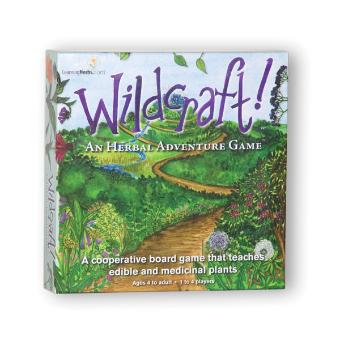
3) WILDCRAFT! (LearningHerbs.com): I was attracted to this game by Kimberly and John Gallagher because it teaches kids to recognize common medicinal plants in nature and their uses, and I’m all about nature awareness for my kids. But the game mechanic is purely cooperative, and fosters truly collaborative game play toward the goal of getting everybody to and from the mulberry patch in the middle of forest in the time between sunup and sundown. Players draw Danger Cards for ailments like bee stings, fatigue, blisters, and sunburn, as well as plant cards; a system of symbols and detailed botanical drawings make the game playable even for pre-literate kids. And they collect Cooperation Cards that they can use to bring the last player up with them to get through the forest faster. Educational Skills: Plant recognition, herbal medicine. Social Skills: Turn-taking, cooperation/collaboration, strategy.

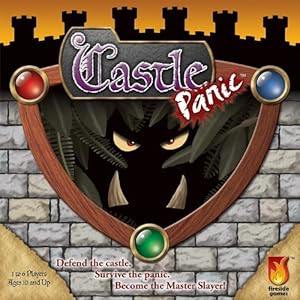
4) CASTLE PANIC (Fireside Games): In this game by Justin De Witt, players defend a castle in the center of a board shaped like a bullseye, which is accurate, because you’re under heavy siege by monsters of all kinds lurking in the forest around your keep. As the monsters advance on all sides, players cooperate to defend their walls. It’s largely hopeless, but it’s excellent fun to toss resource chips and skilled warriors back and forth and see how long you can hold out this time. Educational Skills: Um, trolls? Castle building? Social Skills: Cooperation/collaboration, strategy, graceful losing (not much winning).

5) LIGRETTO DICE (Playroom Entertainment): Otherwise known as “The Noisy Game” in our house, each player gets a cup full of six-sided dice of four different colors in this game by Inka and Markus Brand. You shake and dump them out, then race to put your dice on the board in ascending order in each color column. It’s a little bit Yahtzee, a little bit speed game. Adults might have to throw a few games ’til the kids get up to full speed, but once they climb the learning curve, it’s game on. Educational Skills: Numbers, colors, pattern recognition. Social Skills: Fast decision making, calculated risk-taking, winning/losing, strategy.

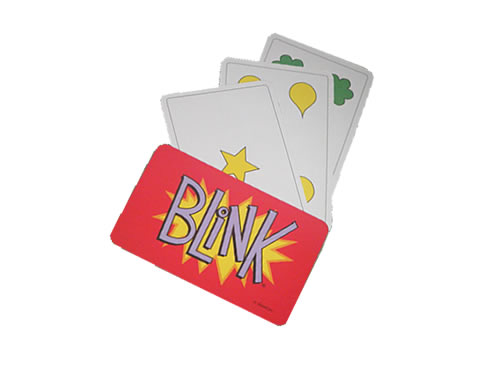
6) BLINK (Out of the Box Games): Another speed game (designed by Reinhard Staupe and artists John Kovalic, Ariel Laden, & Jurgen Martens)  in which players work through a deck of cards by add to two central piles by matching the number, color, or shape of symbols on the cards. Like the previous, adults may have to handicap themselves a bit at first with younger kids, but it’s great for preschoolers and remains challenging long after they’re literate. It’s also a good, portable game to keep handy for unexpected, open-ended waits (along with LCR). Educational Skills: Colors, numbers, pattern recognition. Social Skills: Fast decision making, winning/losing.

7) MUNCHKIN (Steve Jackson Games): There are so many variants that took off from the original dungeon-raider theme, designed by Steve Jackson and illustrated by John Kovalic; our copies are Super Munchkin and Munchkin Axe Cop. You build a hero, outfit him with gadgets and armor befitting the theme, and go up against villains to win loot. Early in the game, you need more points than you probably have in your hero alone, so players need to negotiate with players to fight off high-value villains, but as players start getting their heroes close to their game-winning 10th Level, those team-ups start turning toward piling more villains on the frontrunner, forcing him to run away or lose valuable assets in battle. Educational Skills: Addition, greater than/less than comparison, reading. Social Skills: Turn-taking, strategy, cooperation/collaboration, calculated risk-taking, negotiation, winning/losing.


Jun 16, 2012 - Domestic Engineering    1 Comment

What I Didn’t Know 10 Years Ago: Friday Night Lists

Next Tuesday, my eldest son will be ten years old. This is unimaginable to me, and must therefore be false. As part of my effort to grapple with this harsh reality, here’s today’s installment of Friday Night Lists:

10 Things I Know Now That I Didn’t Know 10 Years Ago

YEAR 1 — Leave the diaper on until the last possible second, unless you feel like a visit to the Bellagio.

YEAR 2 — Birthday cake and banana make awesome, all-natural punk hair product.

YEAR 3 — Parents who disapprove of a Jon Stewart-themed 3-year-old birthday party because The Daily Show is on at 11.00pm EST don’t understand DVRs.

YEAR 4 — If you think 4-year-olds can’t come up with sophisticated rhetorical arguments why they should be allowed to stay up as late as their newborn brother, you’d be wrong.

YEAR 5 — When your kid asks you “What’s the Ring Cycle?” ask “Why do you ask, honey?” before launching into a 20-minute lecture on Germanic folklore, opera, and Looney Tunes. Because he may just be mispronouncing “rinse cycle” after hearing it in the Chipmunks movie.

YEAR 6 — The key that turns the lock in your child’s mind may unlock yours too.

YEAR 7 — Imaginative children sometimes change religion after a really good book. Be open to it.

YEAR 8 — Summer is the best time of year, because kids can just grow right out the bottom of their shorts and you don’t have to worry about pant length until school starts in the fall.

YEAR 9 — If your kid tells you he wants to die and tries to hurt himself, he’s as serious as a heart attack. Listen to him and get help.

YEAR 10 — Wishing for a son like Calvin (of & Hobbes fame) is both a best and worst case scenario, because you might actually get one. (Or two.)

My boy, after a hard day. SuperTiger is always beside him as he sleeps.

The 3 Rs: Recommended Religion Reading

This list was so much harder than you’d think. I’ve read literally hundreds of books about religion and history over the past 15-20 years, so narrowing it down to a few essentials left me feeling like I was trying to find the most refreshing thimbleful of water in the river. The one “book” I wasn’t able to find in a linkable form to include is the current US Military Chaplain’s Handbook, but that’s a fascinating read. It appears to be primarily available in CD-ROM form, which makes sense, since it’s really a large collection of field manuals, devotionals, and other resources.

In the meantime, though, here are the best books I could think of for folks who may or may not have had an Intro to World Religions class in college at some point, but are otherwise not too informed about religion, even their own. Please, suggest your own books down in comments! I’ll have a list of movies that demonstrate important religious concepts or new perspectives that break our stereotypes for you next week.

RECOMMENDED READINGS FOR THE RELIGIOUSLY CURIOUS

  1. Prothero, Stephen, Religious Literacy: What Every American Needs To Know–And Doesn’t. (HarperOne, 2008) This book makes a powerful case that understanding the major world religions–including the reality of Christianity–is absolutely critical for social progress, international security, and continued democracy. Prothero has a new book, God Is Not One, that I haven’t read yet, but profiles in more depth eight of the world’s major faiths.
  2. Livingston, James, Anatomy of the Sacred, Sixth Edition. (Prentice Hall, 2008) This is the textbook I used for my most recent course on religious theory. It fits pretty well with my approach of looking at different facets of religious behavior and belief, and filling in variations on those themes from a wide variety of historical and contemporary religions. Because it’s a college textbook, it costs a stupid amount of money; on the other hand, used copies abound.
  3. Eastman, Roger, The Ways of Religion: An Introduction to the Major Traditions. (OUP, 1999) I don’t use other people’s anthologies of primary sources, for the most part–I pull together a much more diverse selection of my own devising than any I’ve ever found in print, both for religion and history classes. But if I had to pick one for a religious studies class, I’d go with this one every time. It’s by far the most diverse, and the excerpts are nice and long (relatively speaking, to the rest of the field). If you haven’t ever heard the voices of faiths other than yours, I cannot possibly stress how important it is for everyone to read the actual sources themselves.
  4. Meredith, Hickman, Rogers, and Kirkby, The Usborne Encyclopedia of World Religions: Internet-Linked. (Usborne, 2010) This is a “kids'” book, but like everything Usborne does, it’s a hell of a lot more informative than anything you’ll encounter in the vast majority of mainstream media. It’s also lavishly illustrated, something that’s really important as you try to wrap your head around new and foreign faiths, and it’s Internet-linked to all sorts of extra articles, pictures, and videos. This may actually be the very best place to start if you’ve never taken a course on world religion. NB: The link is to the book listing on the UK Usborne Publishing page, but Usborne books are available here in the States too, both through home distributors (think Tupperware, but with awesome books instead of burping plastic) and, increasingly, in retail outlets.
  5. Matlins, Stuart, and Arthur Magida, How to Be a Perfect Stranger: The Essential Religious Etiquette Handbook, Fifth Edition. (Skylight Paths, 2010) This may be one of the coolest books around. Religion by religion, sect by sect, it gives you the basic etiquette to guarantee you don’t embarrass yourself at religious ceremonies of any stripe. Practically speaking, it’s awesome if you’ve got a diverse group of friends who do things like get married, give birth, or die, but it’s also a fascinating read cover-to-cover, and should be considered for the bookshelf of any graduate or world traveller.
  6. Swami Tapasyananda (trans.), Srimad Bhagavad Gita. (Sri Ramakrishna Math, 2003) You may have picked up a free copy of the Gita from a table on your college campus, but this is the edition of the essential (if not only) Hindu holy book recommended by a very smart and learned Krishnavite friend. It’s part scripture, part epic poem, part philosophical treatise, but it sums up with passion and poetry some of the most compelling concepts of Hinduism.
  7. Kornfield, Jack, A Path With Heart: A Guide Through the Perils and Promises of Religious Life. (Bantam, 1993) This is a wonderfully simple introduction to Western Buddhism, especially the core concepts of mindfulness, compassion toward all living things, our attachments to the material world, and the practice of meditation. Western Buddhism certainly isn’t the same as all the Asian variants, but this explains those central ideas in a way that sets the reader up well to make more far-reaching inquiries.
  8. Robinson, George, Essential Judaism: A Complete Guide to Beliefs, Customs & Rituals. (Atria, 2001) I have it on very good authority (from an honest-to-goodness Jewish school teacher!) that this is one of the most popular texts for people new to the Jewish faith; it’s even used as a textbook in conversion classes. I need to pick up a copy myself, come to think of it.
  9. Beard, North, and Price (eds.), Religions of Rome (2 vol.). (Cambridge University Press, 1998) This is a very scholarly two-volume set–the first volume is synthesis and analysis of the religious landscape of the Roman Empire at its height, and the second is full of annotated primary sources (inscriptions, imperial proclamations, legends, and rituals). It’s geared toward the expert reader, but if you want to get a clear view of exactly how much like every other Mediterranean mystery cult Christianity was, and how fundamentally weird that was in the history of human religious practice, there’s no better starting place.
  10. Wansbrough, Henry (ed.), The New Jerusalem Bible (Doubleday, 1999) My Latin and Roman History teacher calls this the “Scholar’s Bible.” The translation is directly from the original Hebrew and Greek by some of the best biblical experts in the world. It’s not the easiest version to read, but it’s probably the closest to the original text as we’re going to get.
  11. Crossan, John Dominic, The Birth of Christianity: Discovering What Happened in the Years Immediately After the Execution of Jesus. (HarperOne, 1999) I can’t recommend against any of Crossan’s work, but this one’s particularly good at highlighting the historical truth that Christianity was not founded by Jesus, but about Jesus, by lots of other people. Crossan is one of the leading experts on the historical Jesus, and this book does an excellent job of demonstrating the real horse race Christianity was in for its survival, and how unlikely in many ways it was to have been the faith that came out on top.
  12. Pagels, Elaine, The Gnostic Gospels. (Vintage, 1989) The discovery of the Nag Hammadi gospels in the 1940s revolutionized our understanding of Christianity in the decades following the life of Jesus. Most Christians get a very tidy, unified history of the development of the faith’s core principles–even the compilation of the Bible–when the truth is very far from that. We knew other gospels existed, but until the Nag Hammadi texts, we only knew them based on what more orthodox critics said about them. This book tells us about the Gospels of Thomas and Mary Magdalene, among others, and illuminates the radically different interpretations of Jesus’ life and message among his own followers.
  13. Pagels, Elaine, The Origin of Satan: How Christians Demonized Jews, Pagans, and Heretics. (Vintage, 1996) Pagels is another historian whom it’s hard to go wrong with, much like Crossan, when it comes to the history of early Christianity. I also recommend this particular book, though, because it highlights the point at which Christianity was no longer the outcast under attack, but the dominant power that could attack others, even other kinds of Christians whose beliefs weren’t officially endorsed. It also helps us understand the anti-Semitic foundations of Christianity that reverberate into the present day.
  14. Aslan, Reza, No God But God (Updated Edition): The Origins, Evolution, and Future of Islam. (Random House, 2011) The absolute best book on Islam I’ve ever read. You get it all–history, culture, faith, practice, conflict, poetry, mysticism, expansion, controversy. Aslan’s analysis is unflinching. I wish more universities would make this their freshman read as students come into the collegiate world.
  15. Armstrong, Karen, A History of God: The 4,000 Year Quest of Judaism, Christianity, and Islam. (Ballantine, 1994) Armstrong is one of the world’s most respected experts on world religion, and she makes it incredibly accessible for regular readers. She’s written dozens of books, on many different faiths, but I wish more people read this one so they could see the full extent to which the Abrahamic religions are interdependent and similar. Armstrong is also doing great work with her non-profit foundation Charter for Compassion, which promotes understanding and dialogue among people of all faiths.
  16. Comte-Sponville, Andre, and Nancy Huston, The Little Book of Atheist Spirituality. (Penguin, 2008) This slim volume is surprisingly full of simple, elegant wisdom. Don’t let the title mislead you, though–this book isn’t out to convert anyone away from believing in gods or religion. Instead, it blends science, philosophy, humanism, and history to prove that there’s immense mystery and majesty in what and where humans are, even before we try to understand the unknowable.


May 22, 2012 - World Religions    13 Comments

Living the Questions

One of the hats I wear upon my surprisingly pink head is that of a religious studies scholar. Believe me, I’m as shocked as anyone that I ended up that way, but there you have it. It’s mostly the fault of medieval studies–it’s pretty much impossible to become educated about the Middle Ages (not just in Europe, but in many cultures) without learning about the religions and the institutions they create.

But I started my inquiries about religion much earlier than grad school. When I went through an abusive relationship in high school that ended in sexual assault, I knew from my mother’s and grandmother’s examples that that was when faith was supposed to kick in and help guide me through dark times. But it didn’t, and I didn’t have a good reason why it didn’t, except that I hadn’t accepted my Methodist upbringing as deeply as I’d thought. Sure, I was Bible Trivia CHAMPION, and sang in choirs and ensembles from the time I was five, but when it came to unswerving belief in the tenets of Christianity? I just didn’t have it.

A lot of young people go through a crisis of faith like this at some point, and it’s pretty common for them to swing way out to the most diametrically opposed idea of religion that they can imagine, then gradually work their way back in to something pretty close to where they started. A kid raised Lutheran may flirt with Quakerism or (gasp!) atheism in their teens and 20s, but usually drifts back as they establish a career and family, ending up with, say, United Church of Christ.

Griffin says, "The Doctors are going to church." I guess Time Lords and Silurians are Unitarian Universalists too (note the flaming chalice, our religious symbol, in the center).

Did I do that? Oh, no. That would’ve been too easy. In my weird Asperger’s brain, I decided that I must have missed something in Christianity, so I set about re-reading the Bible, and a bunch of the Church fathers and modern theologians. When that didn’t yield an answer, I thought maybe Protestantism was the problem, so I looked into Catholicism. Nope, not there either. Maybe Jesus was the hitch? Judaism was fascinating, and I loved the ancientness of its traditions, but no, no faith there. I expanded my search gradually outward, into Asian religions and secular philosophy, in an ever-widening circle of texts and ideas. I loved so much of what I found–the beauty, the ritual, the breathtaking elegance and complexity of both physical and spiritual architectures–and I saw the pathways light up with common themes and practices. I found my own truth in a completely unexpected place, and years later, shocked myself right down to my boots by discovering an actual church home in Unitarian Universalism.

That bright skyline of connections stayed with me, though, and when I began my grad work in medieval Celtic history, I was drawn to the messy intersections where politics and faith collided, maneuvered, and eventually negotiated a common space in medieval culture. The space between what the Church was officially teaching and what the Irish people appear to have believed practically leapt off the page, and I started to pick at the stitches of Irish syncretism, or the meeting and merging of the island’s pre-Christian faith with the new Mediterranean import. Without the official government structure of Ancient Rome for support, and eventually to be co-opted by the Church, Ireland was a weird, awesome case study. I eventually found another, similar collision, on the other side of the world in medieval Japan, where Buddhism slid into Shinto like so many tectonic plates.

In my teaching, I returned again and again to the common threads among religions, which seemed so much more important and interesting than the differences. Even when I was teaching Early and Medieval Christianity, I found I couldn’t, in good conscience, teach about events like the Crusades without giving my students the basic grounding in Islam that they weren’t receiving anywhere else, even at a major university like Penn State. I made this a feature of my classes, and the students seemed grateful to be getting that information, especially post-9/11. A few students took exception to my treatment of their scriptures as, first and foremost, historical artifacts, rather than the direct word from on high; others might have been jolted by the way I talked about saints and wise men as both mortals and archetypes, instead of the uncritical figureheads populating their stories of faith. But, year after year, kids and adults alike told me how they’d gone to church their whole lives and never heard voices like the ones I brought into the classroom, or understood what sacred texts meant to be saying, and I’m proud and hopeful that the historical perspective prompted their own inquiries.

In a time when so much of our society and politics are influenced by the often-radical views of loud religious minorities, I think it’s worth shining a little light on the ideas and practices that bind us together. I want to share some of the sources and stories I’ve taught over the years, and I’ll probably end up doing it in roughly the format I designed for the last general religion class I taught: around the common themes of sacredness in terms of space, time, people, deeds, texts, and events. Let me make this clear: I’m not looking to change anybody’s mind, or convert anybody from one thing to another, or even challenge anybody’s faith. I have no agenda beyond asking the questions, and hopefully giving others a glimpse of that intricate web that connects us all. I’ll primarily talk about religion, which is the structure of beliefs and practices, as opposed to faith, which is the intellectual and emotional resonance of the truth humans seek. I’m always open to questions or counterpoints, but I want the dialogue to be open and respectful. Hopefully, we’ll all be able to see the value in each others’ values.

A Thousand Little Things

This is Gwen.

I’ve been working for a while now, in all my copious spare time, on organizing a fundraiser to help some dear friends. Given how closely to the bone my family lives from time to time, it may seem like an odd choice for me to use my time to make money for someone else, but my efforts aren’t about the money. The money’s just the most immediate way to begin righting a wrong.

Elizabeth and Shreyas have two daughters. Nirali is two years old and completely adorable. And Gwen is eight, whip-smart with a smile as big as the world. Gwen is also autistic. Her family has had to pull her out of the public school where she’s been going since they moved to California because of its stubborn refusal to follow the Individualized Education Program (IEP) that outlines Gwen’s difficulties, goals, and the school’s obligations to help her function at her fullest capacity. IEPs are legal documents, and the school has broken the law time and time again by refusing to provide the support Gwen needs to learn and participate.

If her family just pulls Gwen from the school, with no follow-up, there will be no record of the egregious offenses the school district has committed. Another family with their own bright, high-functioning autistic child might run into the same obstinacy and intransigence, and never know that their experience is part of a pattern that goes back years.

The only way to change things in the future is to fight now. And fighting is expensive.

In return for donations to help Gwen’s family fund the legal fight and prove that a private school can do what the public school refuses, I’m putting together six months of new short fiction from a fantastic roster of writers. Every other Monday (with occasional “freebie” days at random), subscribers will get something new to read. Readers of fantasy, sci-fi, horror, and generally offbeat stories will recognize some of the authors who’ve already committed their talents: Matt Forbeck, Kenneth Hite, Josh Robern, David Niall Wilson, Cam Banks, Steven Savile, and more. Still more authors are still stepping forward; I’m thrilled and humbled by everyone’s generosity. You can subscribe right here.

But I’m not just doing this for Gwen and her family, much as I adore them. I’m not doing this just because it’s the right thing to do, though it obviously is. I’m doing this out of gratitude for the thousand little things my sons’ school does for them, above and beyond Connor’s IEP requirements.

I’ve written before about the misunderstanding, the ignorance, and the physically and psychologically scarring bullying Connor received from both administration and classmates at the school where he attended kindergarten. His Asperger’s Syndrome was so obvious to trained observers that, when we switched him to a different school for first grade, we were called in for a meeting about his diagnosis before the first month of school was over.

Over the years, we’ve had meetings upon meetings around that packet of papers labeled “IEP.” They’re full of jargon, full of measurable annual goals, services and modifications, assistive technology considerations, and other daunting phraseology. But that jargon translates into real help that makes a real difference. It gives him permission to walk out of any situation that’s overwhelming him to the point that he feels a meltdown coming on. It gives him access to tools like fidgets and weighted vests that allow him to focus longer and be more at ease in loud, crowded situations. It justifies the time spent in social skills group and occupational therapy, when other kids are drilling on academics that Connor mastered a grade or two ago.

All those therapies and tricks and tools are incredibly helpful. But the things for which I get down on my knees in thanks, and that I wish for Gwen and every other amazing kid trying to cope in this noisy, gaudy, overwhelming world with their quirky superhuman senses, are the things that aren’t ever written into an IEP. They’re the points of human contact, of compassion from professionals whose hands are more than full with the everyday concerns of all the other “perfectly normal” kids.

It’s the way that, when Connor had a meltdown at school after a week of substitute teachers and his mom in the hospital, the principal offered him a hug, and just held him as he sobbed under the weight of emotions too big and complex for him to sort out alone.

It’s the way that the school social worker offered to use “special funds” to buy a pack of undershirts so Connor didn’t have to wear the pressure vest that helps him stay calm on the outside of his clothes, where it might be noticed and commented upon by his classmates.

It’s the way that they recognized that his need for a break in the day could be fulfilled by an activity that would raise his self-esteem and make use of his extraordinary talents, and set up a schedule to act as a “reading buddy” to second-graders who could use a little extra attention.

And it’s the way that these amazing teachers and administrators are extending the same caring resourcefulness to Griffin, who doesn’t even have an IEP, but has needed help adjusting to kindergarten. They created a “job” for him, carrying a crate of books to the nurse’s office in the morning, and back to the classroom in the afternoon, to let him feel proud of helping as he gets some much needed movement breaks. It’s the special desk they made for him, with faux fur, sandpaper, and a bumpy silicone potholder glued to the underside for him to fidget with instead of constantly touching his classmates and their work.

A thousand little things that make our kids stronger, calmer, more confident, more self-aware, and better prepared for the thousand little things that none of us can foresee from day to day. Like those waterfalls of brightly colored ten thousand origami cranes, fashioned by hand from paper and love, a labor of such dedication that it’s believed to grant the recipient one wish. Except that the visible sign of the grace and compassion of these people isn’t as perishable and impermanent as paper.

It’s the fast, bright, smart, funny, kind, curious, and beautiful boys that their actions are helping to grow. Every parent and every child deserves an education that gives results like this.

That’s why I’m fighting for Gwen.

Jan 25, 2012 - Physical Ed    11 Comments

Fair Warning

I saw my psychiatrist the other day for my regular check-in. As we went over the list of meds I’m taking, both those prescribed by him and those from other doctors, I said that the anti-depressant I’m on right now is working just fine, and that the only real change since I last saw him was that my pain management docs were having me transition from narcotic pain relievers for my fibromyalgia onto tramadol, a non-narcotic.
He looked up from his notes with a sudden frown, and said, “Oh no. That’s not good.”

Since all I’ve heard from day one of being a fibromyalgia patient is that narcotics are bad, and I’m bad for taking them, and I might as well be a crack addict, his response startled me. “Why isn’t that good?” I asked.

“Have they warned you about serotonin syndrome?”
“No, I’ve never heard of it.”
“Well, it’s a fairly rare thing, but when you take more than one drug that affects your body’s serotonin level, you can get serotonin syndrome. You don’t know you have it until you become symptomatic, and once you’re symptomatic, you’ve reached the point at which there’s a 20% mortality rate.”

“My pharmacist didn’t tell me there were any contra-indications…” I began.

“Oh, no, it wouldn’t show up as a contra-indication because it doesn’t happen all the time. It’s just a possibility,” he replied.

“Yeah, but it’s a possibility that kills 20 percent of the people who get it.”

He nodded, and leaned forward to whisper, somewhat conspiratorially, “Really, the Vicodin is much safer for you to be on.”

I was stunned. Not once in the 12 years I’ve been taking various medications for my fibro and my depression has a single healthcare professional ever even mentioned the existence of this potentially fatal drug interaction.

And when I looked it up, I got even more alarmed, because you don’t even have to be that sick, or taking a bunch of medications, to find yourself at risk for serotonin syndrome. If you take any kind of SSRI or SSNRI anti-depressant or smoking cessation drug, and you take medicine for migraines (the triptans), some pain relievers, even cough syrup containing dextromethorphan, you are at risk. If you take an anti-depressant and anything else–over-the-counter or prescription, regularly or sporadically–I can’t urge you strongly enough to read up on this condition.

If the only way to know you’ve got it is to understand the symptoms when you show up, you kind of need to know the symptoms. If it’s caught early, 80 percent of those who get it survive. But if it’s left untreated for more than 48 hours, you rapidly arrive in that other 20 percent territory.

I don’t expect doctors to know every drug and every symptom and read me chapter and verse on every possible reaction to each drug alone or in conjunction. It’s not like doctors and nurses even have drug books or PDRs sitting around in their offices anymore; the Internet has pretty much put those publications out of the print business. But with drugs as common as the ones I’m talking about, and with a potential reaction with a not-inconsiderable number of deaths attributable to it, you’d think it would’ve come up with at least one of the dozen or so doctors and specialists I’ve seen over the last decade.

And it reminded me, yet again, that some doctors just don’t see a problem with withholding information from their patients. When I started grad school in 1997, I started getting absolutely blinding tension headaches. The doctor who saw me at the student health center prescribed me a tricyclic anti-depressant to manage them; it’s a not-uncommon off-label use. In the six months that followed, I put on somewhere around 45 pounds, at the same time as my husband and I went vegetarian and I was using an elliptical machine every day. I was frustrated and distraught at this inexplicable weight gain, and my self-esteem was devastated.

It wasn’t until two and a half years later when a female CRNP said, “Didn’t the doctor who prescribed it warn you that one of the most common side effects is moderate to severe weight gain?” I gritted out, “No, he most certainly did not.” She sighed sympathetically and asked, “A male doctor?” I nodded. She said, “They do that all the time. They just don’t think it’s a big deal. They don’t understand how women take that sort of thing.”

I’ve never managed to get my weight back down to where it was before I went on that medication, and that struggle takes a daily toll on my feelings toward my body, my self-worth, and my sex life. That a doctor wouldn’t think to warn me of something that major, because he didn’t “think it was a big deal,” makes my head explode. Just like it did the other day, when I was finally been warned of the risk I’ve been exposed to for so long.

I’d like to be able to just brush it off and think that it just didn’t occur to all those professionals that I’d actually be more comforted knowing all of the reasonable risks I’m incurring by following one treatment plan over another. I know it’s not the same for every patient, but it’s probably that way for more patients than they think it is. More and more, information is power, and people believe that doctors aren’t infallible and patients can’t abdicate understanding or control of their conditions.

Once again, I’m reminded and reassured that I really am my own best advocate. Sadly, what I’m most looking for in a physician these days is one who respects my knowledge of my own body, my medical history, and my research skills. It stings to pay someone with a prescription pad to just execute the treatment that I’ve found to be best. The least I can expect is fair warning if something either of us has come up with has potential side effects and risks. And when that warning isn’t given–when you discover the risks on your own or, gods forbid, through a close shave–it erodes your faith in the whole system, and every well-intentioned, well-educated professional who comes after them suffers the consequences of the mistrust that others earned.

Dec 15, 2011 - Political Science    1 Comment

Superior Volunteerior: Reverb Broads 2011 #14

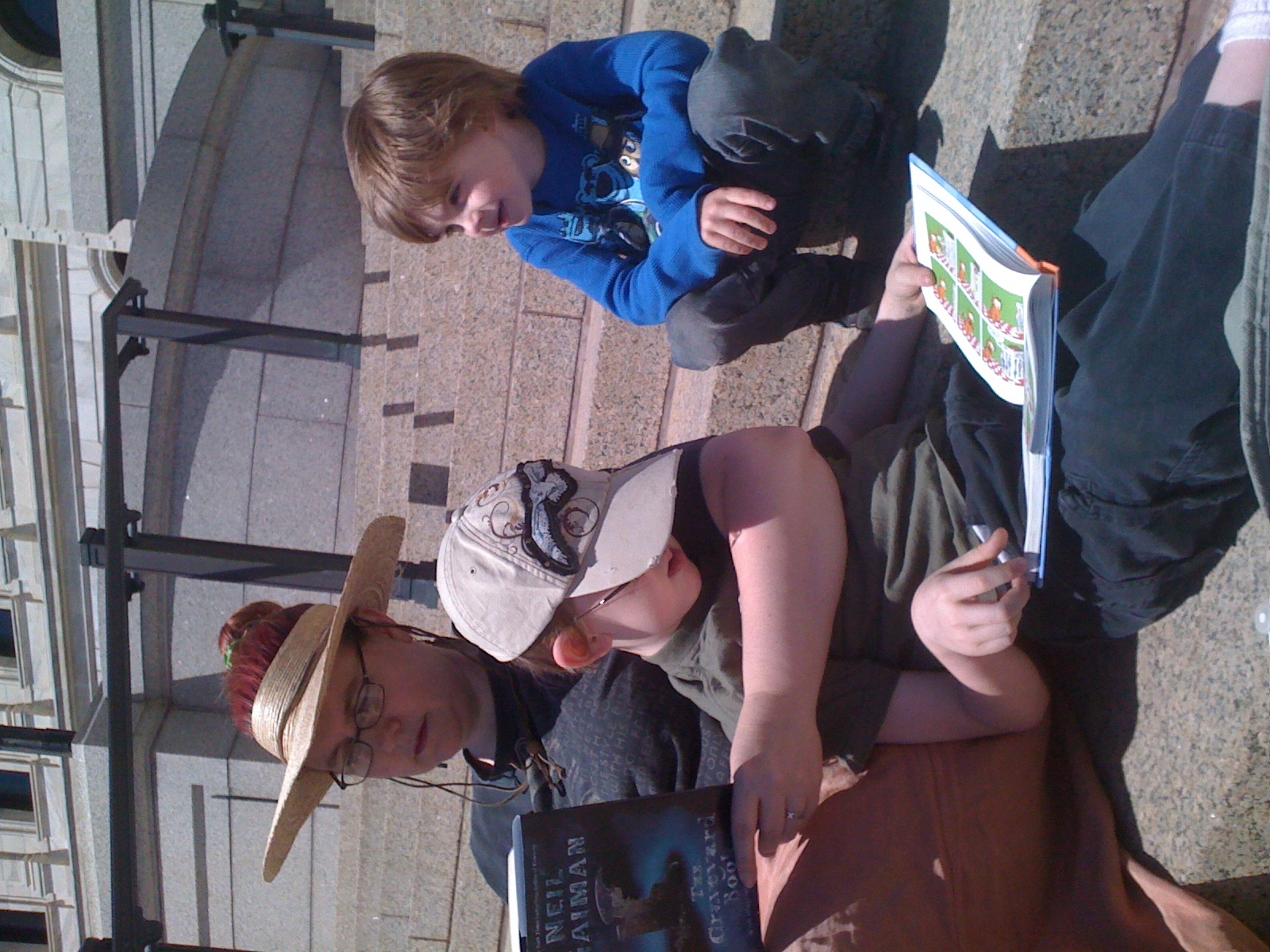
Snuggled up with my boys on the capitol steps for the Read-In For Civility, in support of Neil Gaiman and libraries, May 2011

Reverb Broads 2011, December 14: Is volunteering something you do regularly? If yes, where do you volunteer? If not, why not? (courtesy of Kassie at http://bravelyobey.blogspot.com)

I am a total philanthropy geek — so much so that, last fall when I helped admin an event called Speak Out With Your Geek Out, I wrote about loving philanthropy like some people love video games and stuff. I love helping, and I love geeking out about new ideas and systems for getting that help to the people and places that need it most.

And volunteering is something I was brought up to do. As I’ve mentioned before, my grandma taught Red Cross first aid and swimming classes, and led Girl Scout troops for ages. My mom ran a dozen things at our church, not least of which the Sunday School program for a while, and did a stint as PTO president, too. And they were both the kind of people who wrote little cards to sick friends, or drove old people to doctors’ appointments — in fact, by the time she stopped doing that, my grandma was regularly driving people a decade or two younger than her, who would tell her how horrible it was to get old!

So it should come as no surprise that I volunteer in lots of places, all the time. This year, my sons’ school is the main focus of my volunteerism, so much so that it’s actually made me cut back on my level of involvement other places. I had to give up my shifts at the library when I picked up more work hours, and when I got elected president of the PTO, something had to give, so I dropped out of church choir for the time being.

As I’ve said before, we are incredibly blessed with an awesome neighborhood school, and I absolutely love volunteering there. This is going to sound horrible, but I like my own kids better when I’m spending time with other kids. I read aloud in their classes, I chaperone field trips, I advise the Student Council, and I do a whole host of things for the PTO. The kids all know me by name, and they wave and grin and stop me to tell me new (horrible) jokes and Important Things about their lives. I get paid in spontaneous hugs and flattering adoration. It’s a pretty awesome deal.

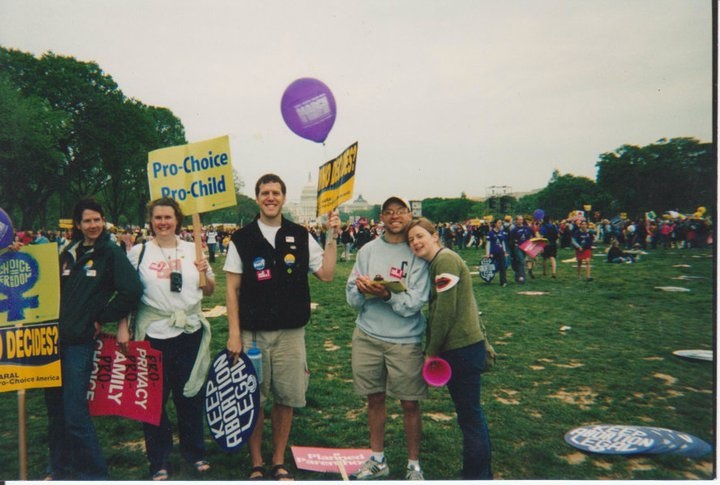
At the March for Women's Rights in Washington D.C., April 25, 2004. My sign says "Pro-Choice, Pro-Child"

I’m also very active politically. There are few things I like more than puttin’ on my protest boots and pounding the pavement for a cause I believe in. I dragged my family down to the capitol steps on a bright spring afternoon for a Read-In for Civility, after a stupid state legislator insulted awesome author Neil Gaiman for taking public money for a library program. I helped a friend with his city council campaign. I marched with supportive signs in front of Planned Parenthood on Good Friday. I attended activist training with Minnesotans United for All Families to help fight the proposed “marriage amendment” next year. When I believe in something, I think it’s worth acting on.

All of this is to compensate for the fact that we have almost no money at all to spare for charitable causes. I struggle constantly with wanting to support every worthy cause I encounter, especially this time of year, when the appeals are coming in hard and fast. I’ve reconciled the fact that time and talent are just as valuable to many organizations as treasure, but my heart still hasn’t relinquished all of the guilt that comes from having to turn down so many appeals. It’s hard to esteem your gifts when you don’t always esteem yourself.

Kid hugs go a long way, though.

I Can Read With My Eyes Shut: Reverb Broads 2011 #9

On my pilgrimage to the Seuss Landing at Universal Islands of Adventure

Reverb Broads 2011, December 9: What was your favorite children’s book? (courtesy of Niki at http://nikirudolph.com)

Pick a single favorite children’s book? What, are you people trying to kill me? No, I see it all now: you want me to do your holiday shopping for you…

I’m bad at the favorites game, no matter the medium. That whole “Ten CDs/Books/Movies/Games/Wombats On A Desert Island” meme is completely beyond me; in fact, the only thing I can do every time I say that, as soon as I post the list, I’m going to think of at least three I would have to change. So this is going to be more of a whirlwind tour than a deep reminiscence.

I literally can’t remember a time when I couldn’t read; I had maybe a hundred sight words by the time I was two. When they tested me for kindergarten, I was at a fourth-grade level. Pretty much anything I ever wanted to read, I just picked up and gobbled down. This doesn’t mean I didn’t love children’s literature. I did — I do.

So I’ll start in the place everyone who knows me would expect me to start: Doctor Seuss.

Yes, I spelled that correctly; please absorb that bit of knowledge and carry it forth into the world. And I know, I know you love him too. Who doesn’t? His stuff never gets old. But much like the Muppets, I just never let Dr. Seuss go as I aged. I memorized and did a dramatic recitation of Thidwick the Big-Hearted Moose for Forensics in high school; I went to State on that story. And when I got to college, the first club I joined was the KU Dr. Seuss Club. I was its president my sophomore and junior years. We used to go into Lawrence’s elementary schools and read to kids, to validate our weekly meetings and impressive membership. I was even featured in a story about the club that hit the Knight-Ridder newswire (FYI: my maiden name was Perinchief).

But when I was the age when most kids are enamored of Dr. Seuss and other picture books, I was all about the nonfiction, too. I had several phonebook-sized collections of weird facts that I recited to anyone and everyone (this particular sin is being revisited upon me even as we speak). And there was a biography of Dolley Madison that I checked out almost every time I was at the library, and must have read a hundred times. My grandparents took me to the Wisconsin State Capitol when I was four, and I argued with the tour guide that Madison was obviously named for Dolley, because she saved the White House and what had her runty little lump of a husband ever done. This was not the first, nor the last, time in my life I’ve been stared at like a freakshow.

As I got older, my tastes evolved pretty quickly — I was a rabid Sherlock Holmes fan by the time I was in sixth grade — but some children’s lit still stands out in my memory. I adored The Westing Game, and I’m so happy to still see it on regular middle school reading lists. And The Phantom Tollbooth is as fresh today as it was 25 years ago; I’ve been loving all the anniversary celebrations this year. I still read A Little Princess from time to time, just to relive the delight and wonder of that story, and the movie is a little-known gem. Sure, I read my share of Judy Blume, Beverly Cleary, Babysitters Club, and Sweet Valley High, too. I was truly ravenous, and I could chew through one of those “age-appropriate” books in under two hours. But my parents never restricted me to the short-shelved section of the library, for which I remain grateful.

And now I have new favorites, but they’re my favorites from reading to my own kids. Books like Oh My Oh My Oh Dinosaurs and Barnyard Dance by Sandra Boynton, the Charlie and Lola books by Lauren Child, and the Skippyjon Jones series by Judy Schachner are a riot and a joy to read aloud. In fact, there’s a thing called the E. B. White Read-Aloud Awards that’s been going for just a few years now that makes a great place to start finding those books you’ll never get tired of reciting at bedtime. And achingly sweet books like I Love You, Little One by Nancy Tafuri, God Bless the Gargoyles by Dav Pilkey (this one is NOTHING like Captain Underpants, trust me), and Polar Bear Night by Lauren Thompson still get me choked up, especially when my sweet boys fall asleep while I’m still reading quietly at their bedsides.

I read in my kids’ classrooms every few weeks, so I’m having to expand my repertoire to find short, funny stories that fourth-graders like. The Wayside School stories by Louis Sachar have been very well-received, but I’m always looking for new suggestions.

I figure, by the time I’m done reading aloud to my kids, their kids should be just old enough for some Doctor Seuss. And they’ll know right where to find Grandma’s copies.

Nov 10, 2011 - Uncategorized    9 Comments

We Are…More than Penn State

I am a Penn State graduate; I received my Master’s in History in 1999, and I was awarded honors for that degree. I sought to complete my Ph.D. in the same program, but was one of the people marginalized and ultimately edged out because we did not fit the administration’s vision and mission for the History Department they were interested in building.

I worked with Penn State faculty of staggering intelligence, experience, and expertise. My advisor and Ph.D. committee members helped me acquire my own firm foundation in the history of ancient and medieval Europe and Japan. I collaborated with experts from a variety of disciplines on a curriculum-development program supported by an NEH grant, and I helped organize, and even presented at, the university’s international medieval conference. I’m not going to name-drop, but I’m immensely proud of the people of international and enduring stature with whom I studied.

I taught History, Religious Studies, and English at Penn State, as a Teaching Assistant, Lecturer, and Adjunct Faculty member, for 10 years. I wrote my own courses, from curriculum to annotated primary source compilations, and I earned what I was told were “impossibly high” student evaluation scores every semester. My students were, for the most part, bright and motivated and civic-minded.

All of this is to say that, when I talk about Penn State, I know of which I speak.

The people who say that Penn State football is the local religion are not wrong. In fact, it’s a more apt comparison than they probably realize. The institution is storied and expansive, inextricably associated with the reputation of the school and anyone who has passed through it. Its financial impact is difficult to quantify: there’s no question the program has brought in hundreds of millions of dollars over the years, but there’s also no question that the school allocates resources to athletics that can and should be spent on the university’s actual mission of education. As such, Penn State students pay what amount to private school prices for a state school education (mostly conducted by grad students, a topic for another day), because it comes with a winning team.

And while the edifice of Penn State football bears striking resemblance to the Catholic Church, its history and reputation has been largely constructed around a single person, much like today’s evangelical megachurches. Joe Paterno’s record may be the substance of Penn State’s athletic reputation, but his personality is the soul. Penn State doesn’t just claim a winning football program — it claims a moral one, a program that forms young men into admirable athletes and upstanding people.

So the most appropriate comparison to draw for the impact of the Jerry Sandusky sex abuse case is to the Catholic Church sex abuse case. He contributed to the rise and reputation of the institution, while using the access and authority it conferred to exploit children who reasonably believed that their rights were nothing next to the man who was assaulting them. He used a charitable foundation to situate himself among his targets, and to shield himself from suspicion for being seen in their vicinity. He probably believed that these kids should be grateful for the attention and advantages he was giving them, and that the sex acts he forced them into were a fair exchange for that.

And, of course, he was utterly, criminally, repellently wrong.

But when the superiors who derived their reputations from that same institution were faced with proof that someone had exploited and subverted its authority for personal, immoral gains, their first thought was to protect the institution, not the victims. They surely thought they were being careful at first, wanting to “gather all the facts before acting.” Except that to act would destroy something that so many people depended on for income, security, and self-esteem. So a wish to proceed slowly and carefully slid into defensiveness, then resistance, then cover-up.

And even now, it’s easier for those who still get their sense of worth — after all, the cheer that goes up all over State College is “We Are…Penn State!” — from the institution to question the sincerity and timing of the victims, rather than deal with the hard fact that someone used the faith and pride a community had invested in them to do something unspeakable.

The kids who marched in the streets last night — it wasn’t a riot; the lampposts in Beaver Canyon get torn down for everything from St. Patrick’s Day to a busy night during Arts Fest — might have said they were doing it in support of their beloved JoePa, but it wasn’t really about that. It was about the value of what they’re at Penn State for. Most of them are going to graduate twenty to fifty thousand dollars in debt, much more than they would pay to go to one of the many Commonwealth Campuses across Pennsylvania. Part of what they’re paying for is the experience in State College, and for almost 50 years, that experience depends on having a team to be proud of, and a school that others admire.

It’s their reputation, too, that’s been destroyed, without consent or knowledge. Firing Joe Paterno was the only legitimate action that Penn State could take, but to kids and alumni, that’s an admission of guilt that’s on par with having to admit that the Pope is no longer infallible. And if that can happen, then maybe Penn State can’t offer them the security they thought they were getting.

If boys can be raped in the football complex, can anyone be safe anywhere on campus?

If JoePa would protect his reputation before that of the players whose futures ride on it, can any student count on the faculty and administration to prepare them for the harsh world that awaits them?

If a charity can be used to target and groom victims among the children it’s supposed to be helping, then has the world’s largest student-run philanthropy organization been doing good or harm (and what the hell have they been on their feet for 72 hours for, anyway)?

And if Penn State’s reputation crumbles with its football program, then what is that name on their diploma and résumé going to be worth?


Pages:«123»