Political Science, Psychology, Social Studies
  No Comments
 Love > Fear
I’m going to summer camp this year. Not as a parent or a teacher, but as a student at the Leadership Institute run by National People’s Action. This opportunity is dearly bought with the love and financial votes of confidence of many friends, as well as the perseverance of the Darling Husband, who’ll get his share of single parenting back from all those cons he’s attended for work over the years. And I’m determined to use this camp’s resources to level up my skills and be a stronger leader for the causes I feel strongly about. I know it’s going to be a challenging, agitating, soul-searching experience–I’m ready for that.
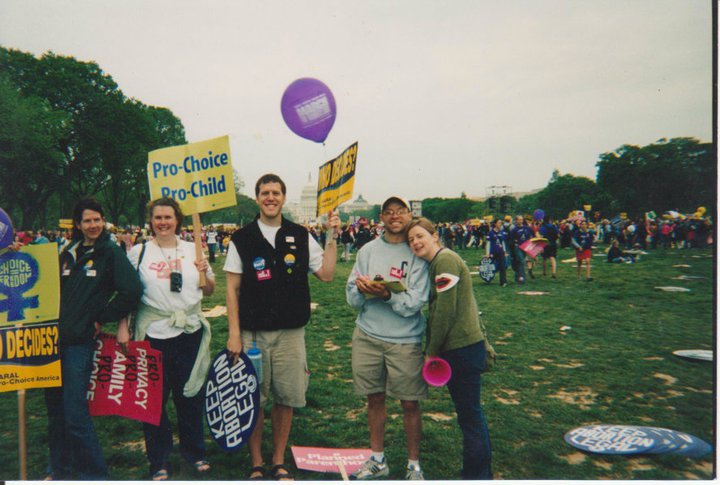
But today, I was faced with a view of my activism that I’d never, ever envisioned. A beloved friend suggested that I might be on the path toward the kind of activism that harms and terrorizes other people. And I found myself replaying all the marches, rallies, phone calls, planning meetings, training sessions, and conversations I’ve had. I searched them from the outside looking in, scanning for visions of myself as frightening, threatening, angry, or intimidating. And, of course, my vivid visual imagination got straight to work manufacturing reflections of past scenes or shadows of future selves in which I’m furious and self-righteous, intolerant of other viewpoints, but blind to the faults in my own.
But those pictures aren’t real, and the rest of my memories yield images I can’t associate with terror. I speak clearly and fearlessly, yet with respect, to anyone who’ll listen. I work hard, but I goof off too and distract my friends for a few laughs in brief downtimes. I sing, I clap, I chant, I dance. I’ve cried with both joy and grief in the halls of power and in the streets.
I don’t know how these things are scary.
I do have the clarity to see that parts of my activism might provoke a negative response in some people. I may appear to have a rigid sense of what’s right and little tolerance for other positions. My voice can be strident when I try to make it heard over those who try to drown it out. I’m not a small person, and when I raise a fist of power or link arms in solidarity with others, I probably look unmovable. I talk a lot about the actions I’m taking, because they take up a big part of my life. I retweet too much.
It IS radical, what I do. Maybe I should get used to that statement: I am a radical. I believe in radical things, like the worth and dignity of every single person on this planet, and the power of a single person’s action joined with others. I do radical things, like give my time and energy and voice to causes that do not directly benefit me at all, just because they seem worthwhile and I recognize the power that comes with my privilege. I try to offer radical acceptance to every person I meet, by acknowledging that every life is a journey, and we’re not all at the same place on the path at the same time–judging or criticizing another person for being where they are on their path accomplishes nothing.
The internal conflicts I weather as I work through the evolution of my beliefs and the consequences of my actions aren’t visible to most people, so I’m sure I seem like another cardboard cut-out liberal rabble-rouser. I don’t talk with everyone about why some causes get my attention and others don’t. Part of that is embarrassment at the inexplicable, emotional reasons for some of those decisions. I have internal boundaries among the issues and tactics of activism that don’t always come from a sensible place.
But I hope my primary motivations are clear as day: I want everyone to feel the same love and enjoy the same rights I do. I love learning and free will and self-determination, and I believe everyone deserves equal access to them. Because that’s what moves me, I’m categorically opposed to tactics designed to frighten or deprive anyone of something that’s rightfully theirs.
And here’s where I’ll make the only qualification in this whole screed: disproportionate political or financial power is not a right. Those are things you earn, and if you use them to take away the rights and freedoms of others, then you have to be ready for the same people who gave them to demand them back. If you’re the one in power, the idea of losing that position might be frightening. It shouldn’t be, because power over others isn’t a right, but nobody likes to lose control. I can empathize; I’m a control freak too.
But one of the founding principles of democracy and human rights is the power of a group of people to rise up peacefully, speak their piece, and create change in society. Sometimes, the language of this right is misappropriated by people who want to use that power to take away others’ rights (often, that exact same right they’re exercising). But the truly great moments in history largely correlate to times when individuals have stood up for their rights in the face of overwhelming disparity in power and force.
It takes guts and advice and practice and support to do that and not falter. It takes the sight of other people to the left and right of you, whether it’s in a parade or a phone center cubicle or a line of jail cells. That’s who I want to be for others who are fighting for a better world. That’s what I want to be trained to do. And if my faith and conviction in the possibility of change toward greater freedom makes someone feel afraid of me or bad about themselves, all I can do is say that I love them and where they are in their journey. I’m just trying to be my whole, powerful self and make room for others to do the same.

 I cringe as soon as I hear the bell ringing in front of the grocery store. My kids are primed to be generous, and immediately pester me for pocket change to put in the red bucket. I tell them “no” quietly and, to head off the inevitable “why” that follows, say, “They don’t believe they have to help everyone who comes to them in need, and I don’t want to support that.” I fast-walk the boys into the store and give the bellringer a tight smile.




 Haidt also shares the results of his research into the moral foundations on which the edifices of conservative and liberal thought are built, and his conclusion is that part of the success of the modern conservative movement is based on the fact that conservative ideology appeals to a broader array of moral options than liberalism does. Since liberals often think of conservatives as “narrow-minded,” this sounds counter-intuitive, but really, it’s not. Liberals, Haidt demonstrates, derive their moral judgments almost entirely from whether something cares for or harms other beings, or whether it seems equalizing or discriminatory. Conservatives, on the other hand, respond less strongly to equality and care/harm, but additionally respond to messages of proportionality (more/less work=more/less reward), loyalty (to kin and other identity groups), sanctity (upholding standards of purity or pollution), and authority (respect for institutions), while many liberals actually perceive a threat from high degrees of those sources of morality. I think he’s really on to something, and I agree with what I heard Howard Dean talk about in a speech at Penn State, all the way back in 2004–that progressives won’t be able to accomplish their goals until they learn to articulate the morality of their position from all of these angles, and tap into the emotional heart of their message.
 I’m volunteering for