Domestic Engineering, Social Studies
  2 Comments
 Fear of an Blank Parent
Because it is my highest aspiration to be a troublemaker, I’m setting out today to problematize something we all take for granted. I want to argue that the gendering of parenthood does very little good, and no small amount of harm.
This post springboards off posts by Amanda Valentine and me about the media portrayals of men and fathers as bumbling, hapless idiots who are as likely to diaper the Thanksgiving turkey and put the baby in the oven as watch the football game afterward. It also relates directly to the historic cases about same-sex marriage before the Supreme Court this week.
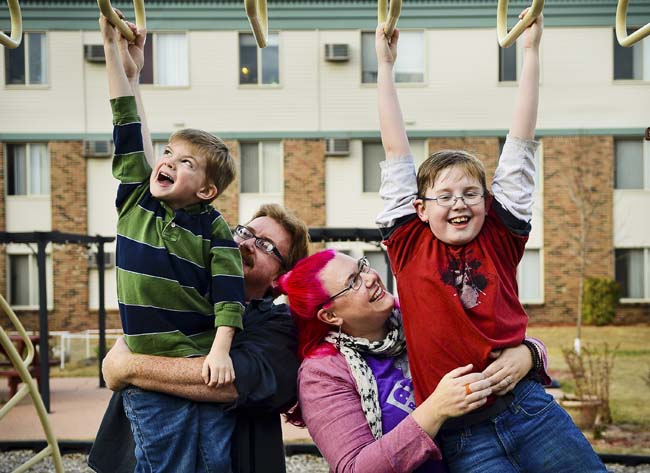
My point is very simple: there is very little difference between the duties my husband and I assume with regard to our children. And since the earliest days–specifically, since I stopped breastfeeding them–the differences in parenting caused by our genders have been vanishingly small.
As parents, we make sure they wash, dress, eat reasonably well (at least over the course of a week, if not each and every day). We send them to school, help with homework, take the inevitable phone calls that come from sending two active, intelligent boys to school every day. We monitor their media, we break up arguments, we cause arguments, and at the end of the day, we tuck them in at night with kisses and dire warnings against getting out of bed again for anything short of a fire.
Absolutely none of these things, or the billion other duties and blessings that comprise parenthood, depend on our biology.
The division of labor that takes place between modern co-parents comes from the frank assessment of one another’s particular strengths and struggles. I crack the whip over homework and science fair projects because I am an educator, not because I am a woman. My Darling Husband does more of the day-to-day housework because I am disabled, not because he is a man. Nor does this indicate I am a failure as a wife and mother, or that he is a weakened, hen-pecked husband and father. Someday, our boys will require The Talk (or to be more correct, The Talks); I honestly have no idea who’s going to give it. I hear the DH has a leg up on me in the visual aids department.
In one of the early hearings on the same-sex marriage bill currently under consideration here in Minnesota, the measure’s opponents brought out an 11-year-old girl to testify against the idea of marriage equality. (You may have also seen her on the steps of the Supreme Court this week; she’s one of their star witnesses right now.) She told the legislators that she loved her mommy and daddy, but that under this bill, some children wouldn’t have a mommy or a daddy, but two of one. “Which parent do I not need, my mom or my dad?” she asked the committee.
And I finally understood why fighting same-sex marriage matters so much to many of its fiercest opponents.
In their world, mothers and fathers do different things for the children. Fathers can’t do mothering, and mothers can’t do fathering. If a single mom or a pair of dads raises a child, there is work being left undone, and the child can’t help but suffer for it. How could anyone possibly be in favor of only half an upbringing?
The gendering of parenthood not only diminishes the power of what parents of both sexes do for their children everyday, but it also confuses the living heck out of some people. When you see signs decrying the erosion of “traditional marriage,” they’re not just talking about divorce and same-sex couples–they mean me and my oh-so-traditional marriage, too.
Even though I’m married to a spouse of the opposite gender, we’re destroying traditional marriage too, by sharing the work–the hardships, the effort, the joys, the rewards–of creating a new family. We’re also undermining the institution by teaching our children (made in the traditional “When a mommy and a daddy love each other very much…” biological way) that moms and dads cook dinner, attend school conferences, travel for work, and tell them to turn off the iPod at bedtime. For the most part, we’re interchangeable.
And our evil scheme is clearly working. They accept their friends with two moms, or one mom, or a dad and a grandma without so much as a bat of the eye. If I had a dime for every time they called the wrong one of us “Mom” or “Dad,” we could afford a bigger apartment. To them, “Mom” and “Dad” are just names to help differentiate between whose attention they’re demanding. It’d probably be easier on us all if there were a random name for “Whichever of you can help me first with what I want.”
My sons are growing up healthy and happy with two loving parents. They’d be no less loved if only one of us were around, or if we were both the same gender, or no gender at all. That’s not how love works–it’s not a zero-sum game.
And when you think of it like that, it’s pretty hard to see two loving, married parents eroding anything about our future.
 Friday is the Autistic Day of Mourning, a day to honor the autistic people who have lost their lives to the desperate or careless actions of parents and guardians, or to the crushing weight of the sensory world that seems inescapable by any other means but death.
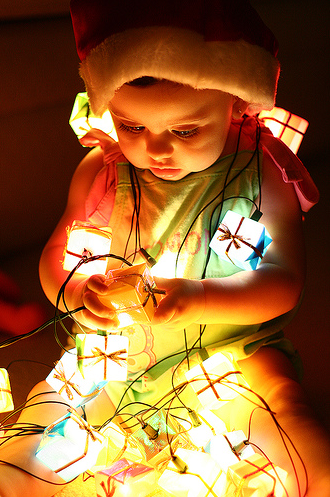 Almost every good and wonderful thing about the winter holidays is a sensory delight. The smells of cold snow and freshly cut pine and butter-rich cookies tingle in our noses. Pipe organs and French horns and jingly bells and heavenly choirs and crinkly paper delight our ears with musical sounds rarely used in the rest of the year. Velvety and satiny fabrics combine with delightfully scratchy sweaters and fuzzy hats in our special party clothes. We write ourselves dietary hall passes for the dozens of special, luscious holiday foods. And the lights…oh, the lights! Who doesn’t gasp and crane at the sight of an elaborately decorated building or brilliantly lit tree?

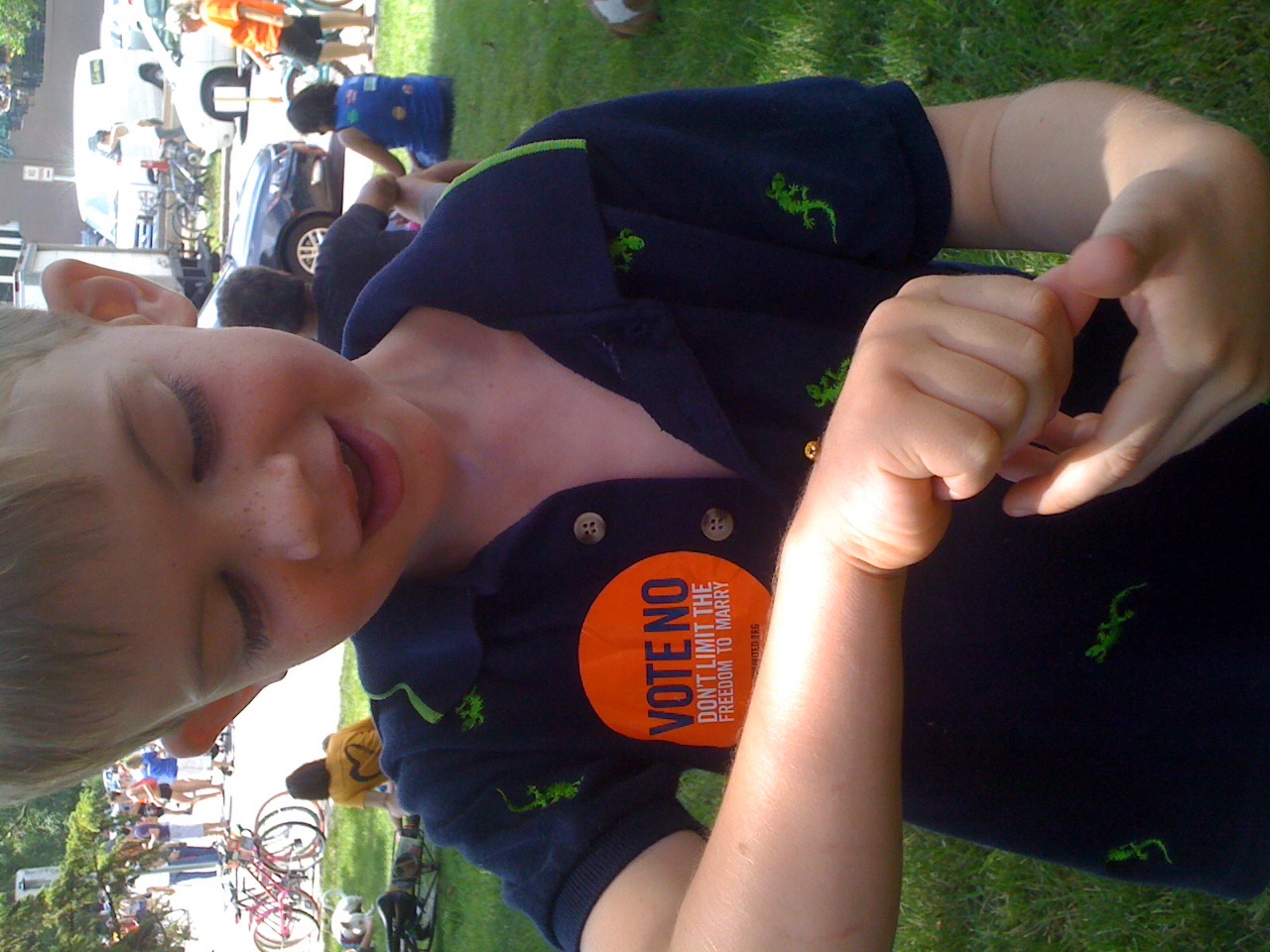
 I’ve been working on the campaign for marriage equality here in Minnesota since March, and

 I absolutely adore Halloween. I’ve been known to skip down store aisles singing “It’s the most…wonderful time…of the year!” at the first sight of skulls and crows. I collect Halloween socks and wear them all year round. I buy gothic lanterns and creepy wall hangings and ghoulish tea towels on clearance for everyday use.
 Celebrated by many ancient agrarian cultures as a cross between New Year’s and Memorial Day, Samhain acknowledges the conclusion of the harvest, the closing down of the earth in preparation for winter, and the liminality of beginnings and endings that allows us to perceive how thin the veils are that separate us from unseen worlds around us. The costumes and the lanterns play games with concepts of finding and evading spirits passing from one state of being to the next. Even trick-0r-treating, often maligned as turning kids into greedy monsters with eroding teeth and manners, reminds us of our obligations of hospitality and the sweetness of welcome on a cold night.
 Finally, it can be fun to teach kids about
  1)
1)  2)
2)  3)
3)  4)
4)  5)
5)  6)
6)  7)
7)  But when tragedy strikes, as expected, in the movie, suddenly I’ve got a sobbing pile of six-year-old on my lap. His bony little shoulders are shuddering, and hot tears soak my collar. I stroke his hair and whisper to him that it’s okay, he’s safe, and I know it’s sad, but it’ll get better, until he slowly uncurls and starts watching again. He doesn’t leave the shelter of my arms until the credits begin to roll.
 It happened when we went to see Chimpanzee at our favorite bargain theater last weekend. It happened when Claudia and Jamie spent their first lonely night in the Met, as I read From the Mixed-Up Files of Mrs. Basil E. Frankweiler. It’s happened at a variety of TV shows and movies at home.
 1.
1.  2.
2.  3.
3.  4.
4.  5.
5.  6.
6.  7.
7.  8.
8.  9.
9.  10.
10.  11.
11.  12.
12.  And, sure enough, when we went out to pick
  I took the boys to the